The cultural horizon known as Chavín developed in the Peruvian Andes between about 1500 and 400 BC – at the same time as Olmec culture was flourishing in Mesoamerica. Its most important and best-studied site, Chavín de Huántar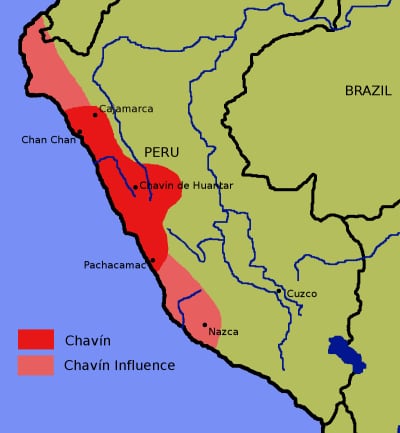 Chavín de Huántar The site in the Mosna river valley and the approximate area of influence of the Chavín culture along northern and central Peru., was built as a ceremonial centre in the heart of the mountains, in the valley of the Mosna river, at a height of about 3,135 metres.
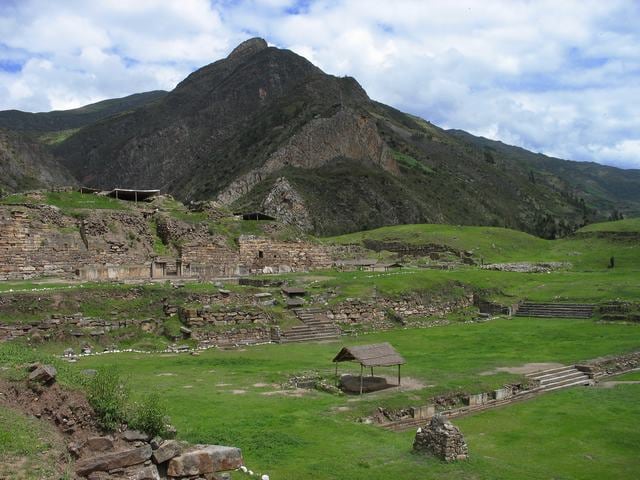
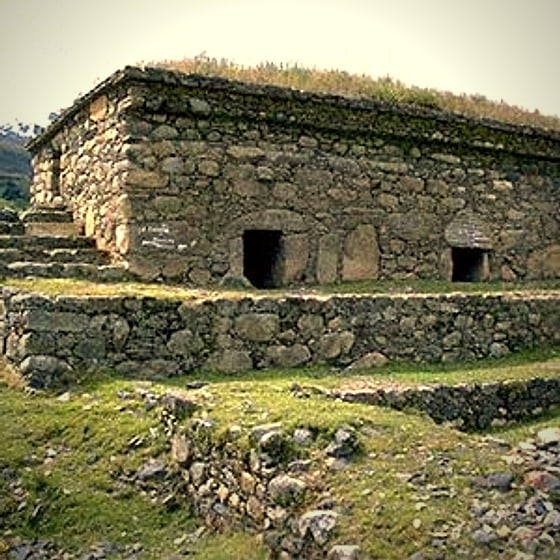
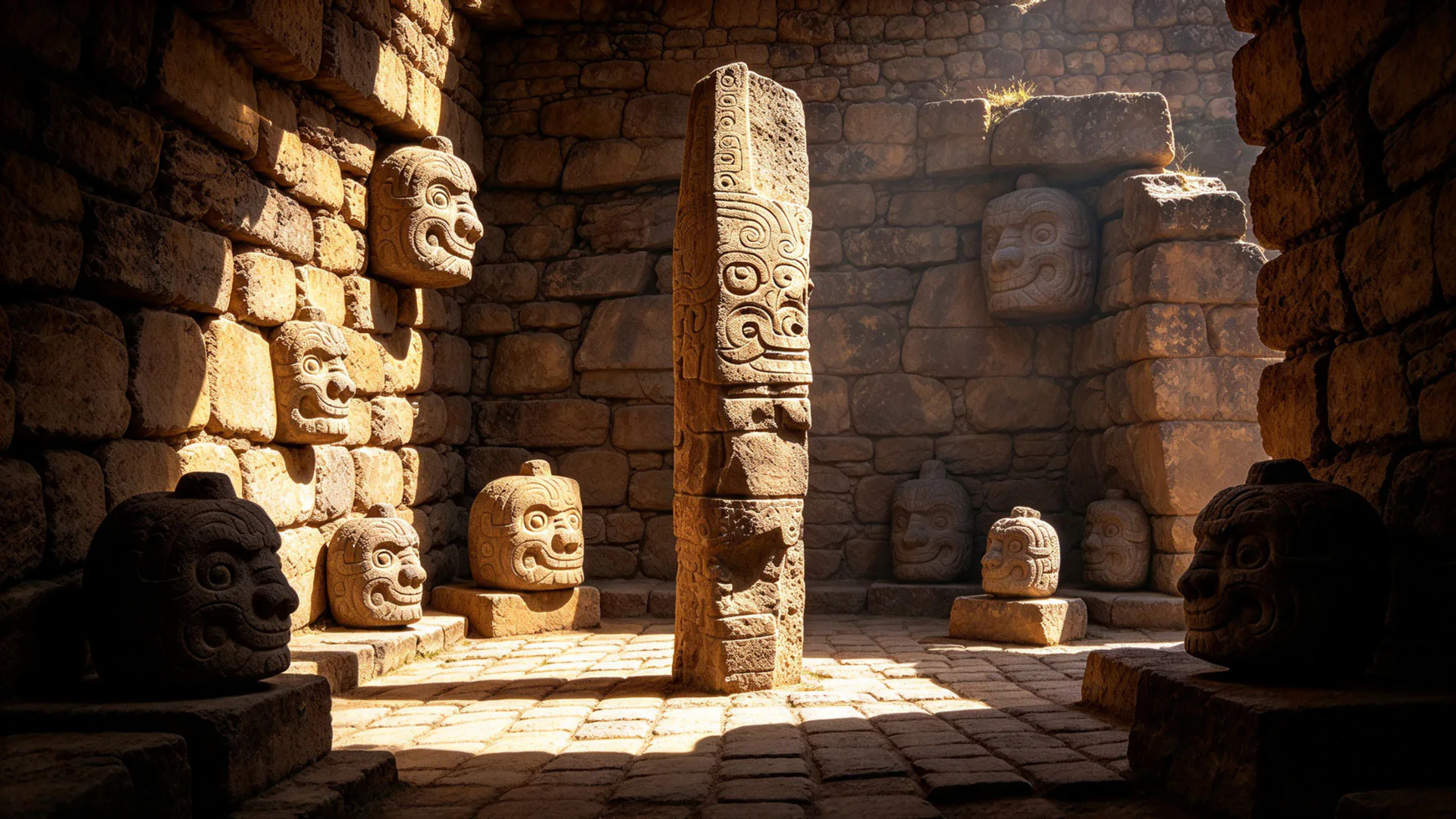
The archaeological complex comprises the platforms, terraces and plazas typical of such ceremonial centres, and its heart is the building known as El Castillo (“the castle”). Stone heads with features recalling the jaguar are set into its walls, while among the mythical symbols of this culture, besides the jaguar, the serpent, the condor and the fish also stand out.
The site also yielded two highly prized monoliths, today on display in the National Museum of Anthropology, Archaeology and History in Lima: the Tello Obelisk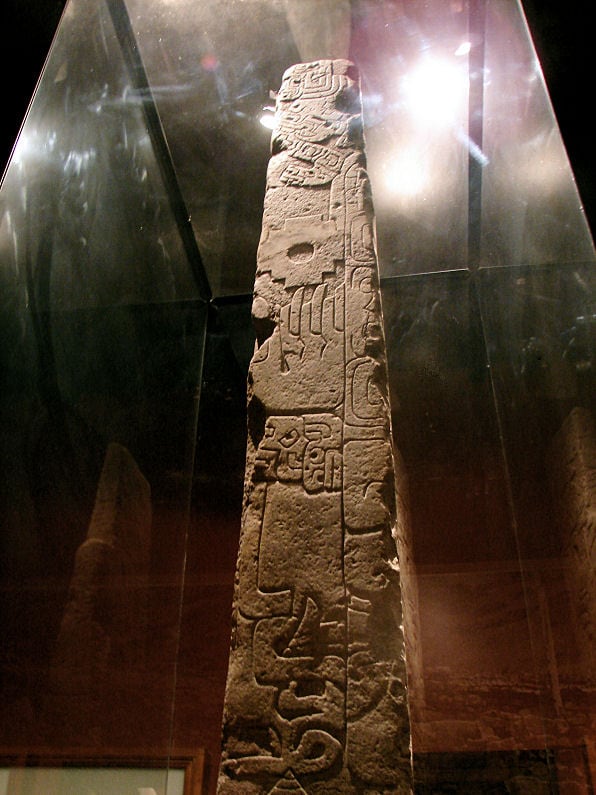 Tello Obelisk Named in honour of the Peruvian archaeologist Julio César Tello. On display in the National Museum of Anthropology, Archaeology and History in Lima., named after the archaeologist Julio César Tello, and the Raimondi Stele
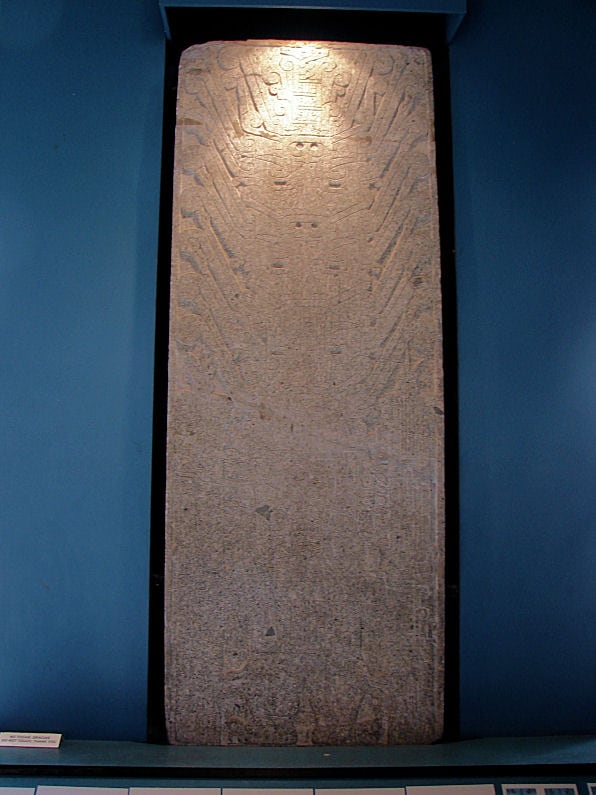 Raimondi Stele Named after the Italian scientist Antonio Raimondi. On display in the National Museum of Anthropology, Archaeology and History in Lima., after the Italian naturalist Antonio Raimondi, who studied Peru in the 19th century.
As to how far the power of this place actually reached, researchers disagree: according to one theory Chavín de Huántar was the capital of a theocratic power that subjected the surrounding peoples politically and religiously, while another sees in it above all a great pilgrimage shrine, a gathering place with no wider political control over its surroundings.
The Lanzón and the cult of the jaguar
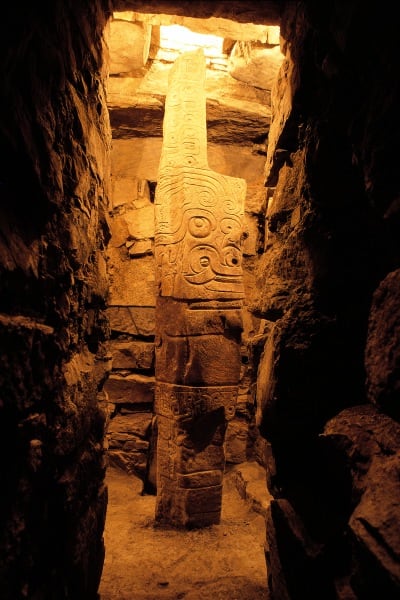
At the very heart of the main building, in a narrow underground gallery, stands – to this day, on the spot where it was erected – the monolith known as the Lanzón: a block of stone more than four metres high, shaped like a long blade and covered with reliefs. It represents one of the central Chavín deities, shown in a way that is at once human and animal – and just such duality was the essence of Chavín religion.
It was believed that during the rites the priests could transform themselves into jaguars and in that way make contact with supernatural forces. Preparation for such a role began early: according to tradition, future priests were accustomed from childhood to sleep by day and keep vigil by night, avoiding sunlight for years on end. Contact with the beyond was also sought with the help of hallucinogenic substancesThe San Pedro cactus (Echinopsis pachanoi) flowers only at night and contains mescaline in its spines, a psychoactive substance that causes strong visual hallucinations. Its use in Andean rituals is documented as early as Chavín times., above all an extract of the San Pedro cactus, whose flowers open only at night and whose spines contain considerable amounts of mescaline.
The stages of that symbolic transformation into an alter ego – a jaguar or an eagle – are shown on the stone sculptures placed around the circular plaza at Chavín. The tradition of using drinks made from the San Pedro cactus in night-time rituals has not died out entirely: in some places on the northern coast of Peru it has survived to this day. Nor did the influence of Chavín religion and iconography end with the fall of this centre – its traces can be recognized in cultures that arose in the Andes much later.
The site is so striking that even the Peruvian Nobel laureate Mario Vargas Llosa, otherwise inclined to a rational, almost sceptical approach to history, described his visit to Chavín de Huántar as a moment in which, amid the plazas, the walls and the dark galleries with the Lanzón, he truly felt for the first time the presence of the ancient pilgrims and the awe that those deities once inspired.