The Wari culture lasted from about AD 600 to 1000 and belongs to the period that archaeologists call the Middle HorizonThe archaeological name for the period of Andean history from about AD 600 to 1000, when great states such as Wari rose in the Andes.. It arose in the Ayacucho region, and during the 7th century the Wari state began to extend its rule over the highland and coastal regions of present-day Peru. Towards the end of the first millennium its power waned, and by 1000 the capital was largely deserted. A severe drought may also have hastened its decline.
The Wari are also credited with the oldest known quipusKnotted cords used to record numbers and other information. The best known are those of the Inca, who used them in running their empire., which date from the first millennium AD – centuries before the Inca used them to keep the records of their empire.
Capital, art and power
The heartland of the Wari people lay in the Peruvian Andes, about 25 kilometres north of the present-day city of Ayacucho. At the time of their greatest expansion, between about AD 800 and 900, their influence stretched from Cajamarca and Lambayeque in the north all the way to Sicuani in the south, taking in a large part of the territory of today’s Peru. The Wari empire is estimated to have survived as a political entity for more than two centuries.
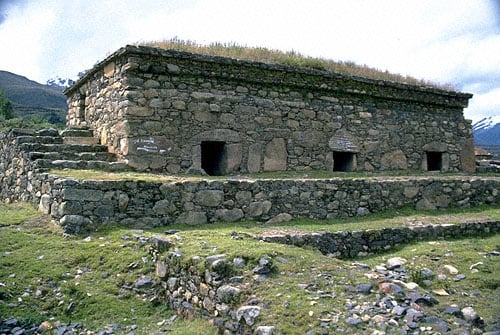
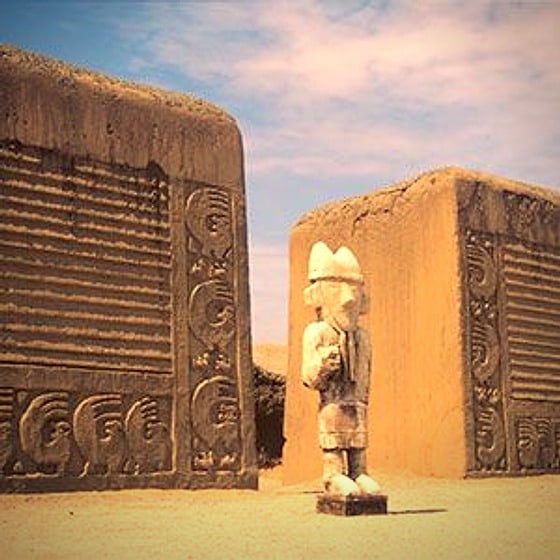
The capital was a developed urban centre, with complexes of rectangular buildings of roughly worked stone, with high walls – in places up to seven metres – which served as palaces and residential terraces. These complexes were surrounded by long city walls, several hundred metres in length, which divided the city into what might be described as separate quarters. Stone and clay were the basic building materials, and the rectangular plan far outnumbered the rare circular buildings.
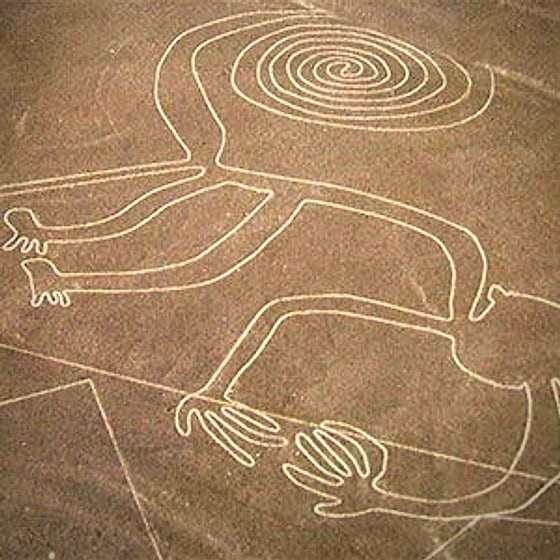
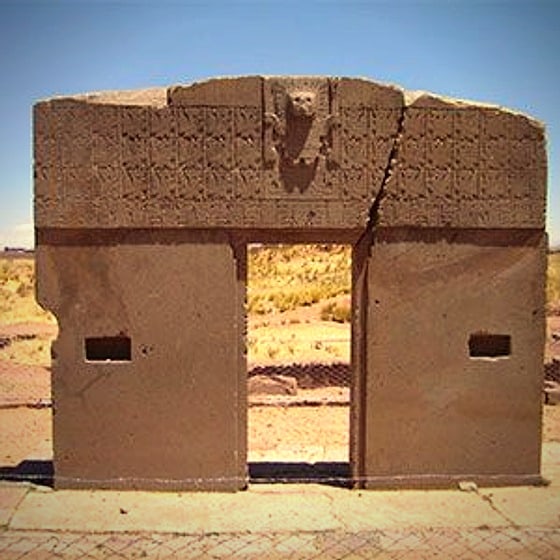
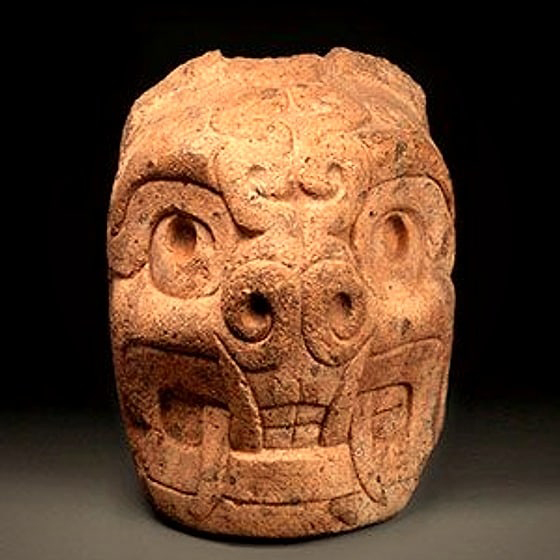
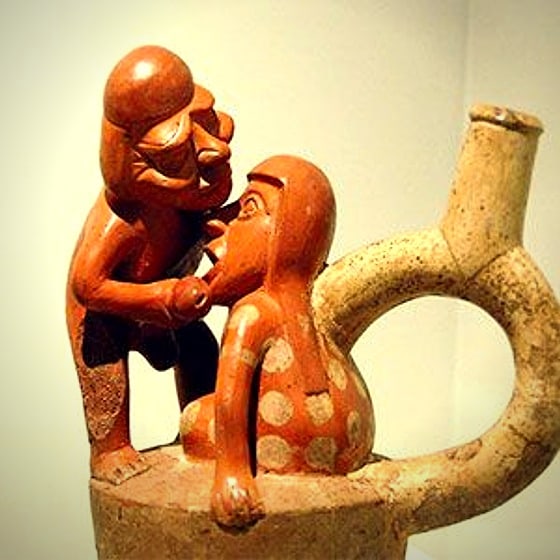
In Wari art the influence of two older Andean cultures is clearly recognizable. From Tiwanaku they seem to have taken the inspiration for their large ceremonial vessels, whose decorative motifs recall the reliefs of the famous Gate of the Sun. At the same time, the smaller cups and vessels with straight, parallel sides betray the influence of the Nazca culture. Whatever the origin of the forms, Wari pottery is marked by a carefully polished surface and rich decoration – human, animal and plant motifs.
Most archaeologists believe that the Wari were a conquering people, organized in a strong and centralized state, from which other important regional centres arose – among them the well-known Pachacamac, near present-day Lima. It is assumed that Pachacamac, as an extremely influential religious centre, in time gained such independence that it contributed to the weakening of central Wari authority, which is today considered one of the possible causes of the downfall of this empire.
Pikillacta
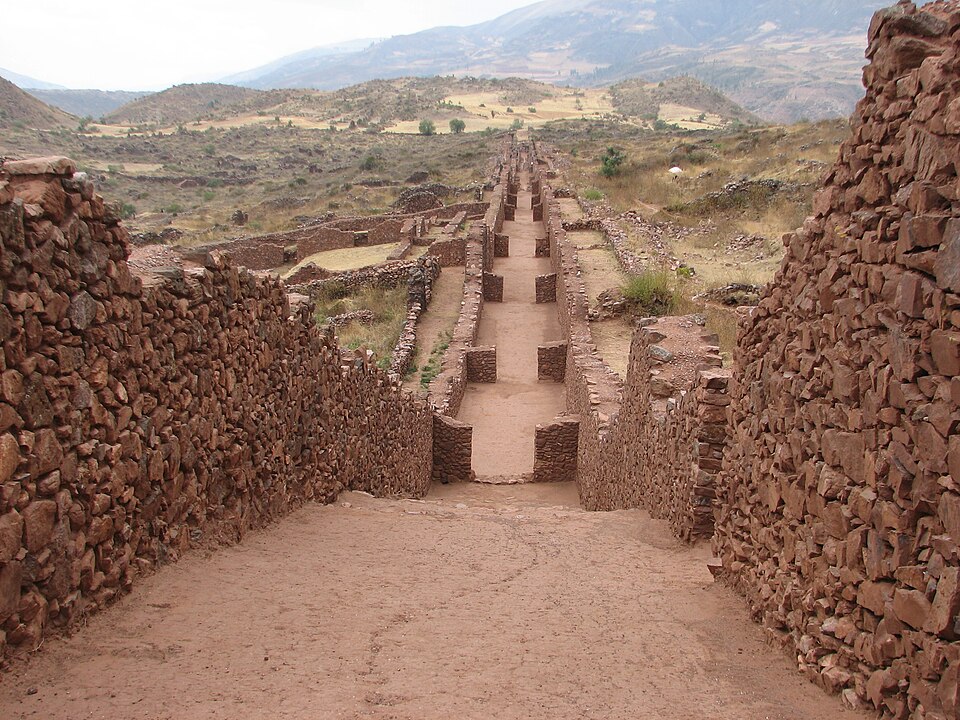
About 30 kilometres south-east of Cusco, in the Lucre district, beside the road that leads from Cusco to Puno, lies Pikillacta (Pikillaqta), a large settlement built by the Wari. It stands at about 3,200 metres above sea level, and its name in Quechua means “city of fleas”. Estimates of when it was built vary – from the end of the 6th to the middle of the 7th century.
Pikillacta was built to a plan drawn up in advance, with straight streets and walls of unworked stone bound with mud, up to 12 metres high. It comprised some 700 buildings over an area of almost two square kilometres, among them about 200 walled enclosures with an inner courtyard and 508 storehouses. Interestingly, it had only seven short streets and almost no windows. Its construction is estimated to have taken almost six million working days.
The purpose of Pikillacta is still debated: it has been interpreted as an administrative centre, as a fort with a military garrison, or as a place of rites and great feasts. The site was first studied by the Peruvian historian Luis Valcárcel in 1927, and excavations were led on three occasions, between 1978 and 1990, by the archaeologist Gordon McEwan.
Less than two kilometres from the centre of Pikillacta, beside today’s Cusco–Puno road, stands Rumicolca, a massive stone structure now thought to have been built by the Wari as an aqueduct, perhaps precisely to supply Pikillacta with water. The Inca later remodelled it and faced the rough Wari wall with finely dressed stone. Pikillacta is today protected as an archaeological park.