Christopher Columbus was born in Genoa in 1451, but his origins are still disputed: whether he was the son of a modest wool weaver, or came from a distinguished Catalan family, perhaps even a Jewish one that hid its identity because of the Spanish Inquisition, scholarship has never fully settled. One of the arguments for a noble origin is his marriage in 1479 to Filipa Moniz, a woman of a Portuguese noble house – later generations wondered how the son of a poor craftsman could have made such a match at all.
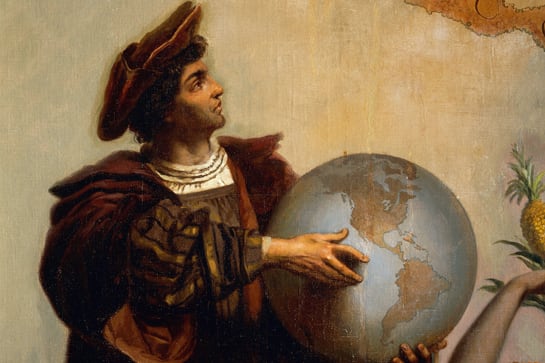
According to one of the stories about his youth, in 1476 Columbus, as a member of the crew of a Genoese merchant convoy attacked by pirates off Gibraltar, saved himself by swimming to the Portuguese coast, where he then settled. In Lisbon he made sea charts, helping his younger brother Bartholomew, and engaged in trade, until he began to work out his plan for a voyage to the west.
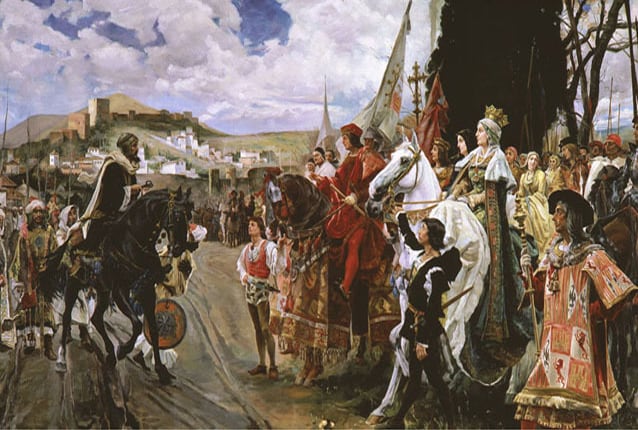
At the end of 1483 Columbus asked King John II of Portugal to finance an expedition westward, by which India would be reached without sailing around Africa. When the request was refused, he turned with the same plea to the Spanish “Catholic Monarchs”, Ferdinand of Aragon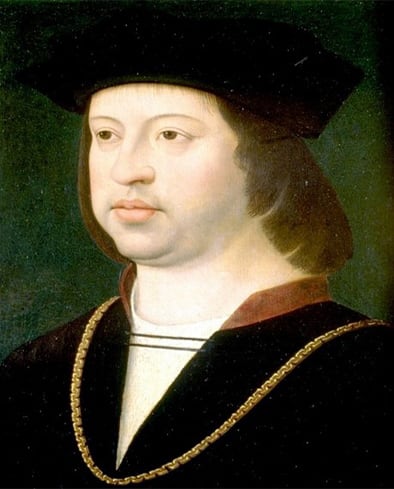 Ferdinand II of Aragon (1452–1516). Together with his wife Isabella of Castile he ruled a united Spain and financed Columbus’s expedition. and Isabella of Castile
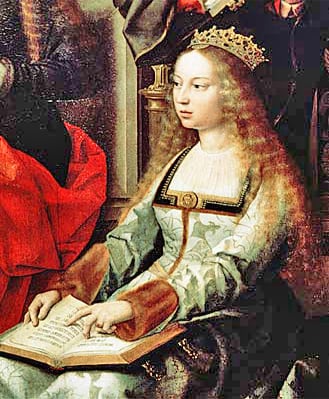 Isabella of Castile (1451–1504). Queen of Castile, whose decision to back Columbus’s venture was decisive for the outcome of the negotiations.. Here too a series of refusals followed, until the plea was finally accepted in 1492.
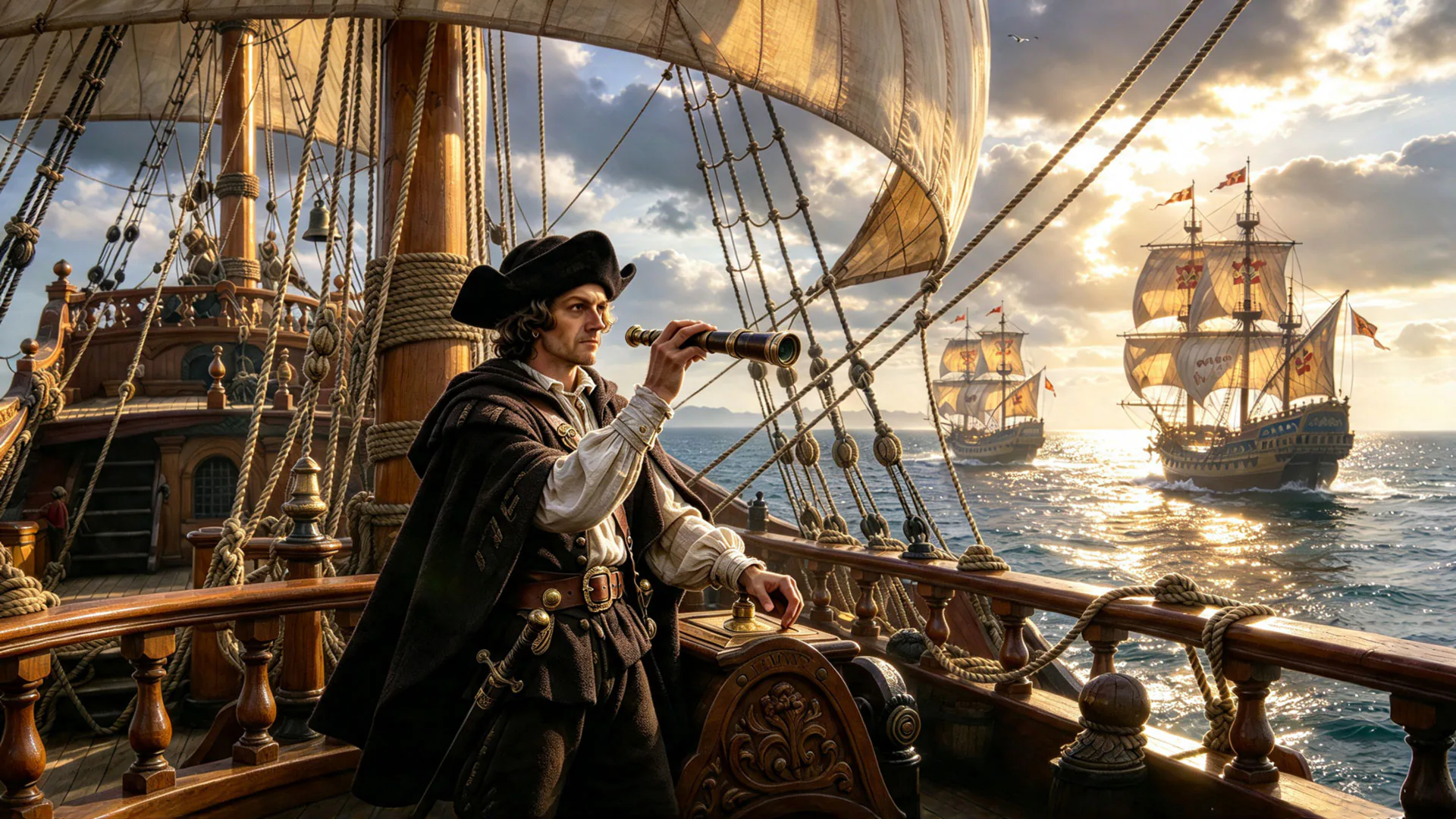
By the Capitulations of Santa Fe, signed on 17 April 1492, the royal couple agreed with Columbus on the terms of the venture: he asked for, and received, the titles of viceroy and admiral, as well as the right to a tenth of the profits of his voyages. The expedition sailed from the port of Palos on 3 August 1492 with three famous ships – the Niña, the Pinta and the Santa María. In that same year another great historical event took place: with the fall of Granada, the last Moorish stronghold on the Iberian Peninsula, the ReconquistaThe centuries-long Christian conquest of the Iberian Peninsula, which began in 718 and ended in 1492 with the fall of the Emirate of Granada. came to an end, the long process of Christian recovery of the peninsula that had lasted almost eight centuries.
The reasons for the voyage
There are different interpretations of what really drove Columbus, much as there are of his origins. Some stress a religious motive, the spread of Christianity; more realistic, however, is the impression that Christianity, however sincerely present in Columbus’s view of the world, served first of all as an instrument of colonization and conversion, not as the basic driving force of the venture. The basic motive was economic – the need to find a route to India for the sake of trade, above all in spices, which at the time, bought through Arab middlemen, fetched prices comparable to gold.
For trade with the East there were, in principle, two routes: the overland one, which the Turks had closed to Christian merchants, and the sea route around Africa – a long and costly undertaking whose first part was accomplished in 1487 by Bartolomeu Dias, who reached the Cape of Good Hope (India itself was reached by that route only by Vasco da Gama, in 1498). Columbus’s plan was bolder: to sail straight west across the hitherto unknown Atlantic Ocean and so reach Asia in a much shorter time. In his calculations he relied on the maps of the Florentine geographer Paolo Toscanelli, which greatly underestimated the true circumference of the globe.
The voyages of Columbus (1492–1504)
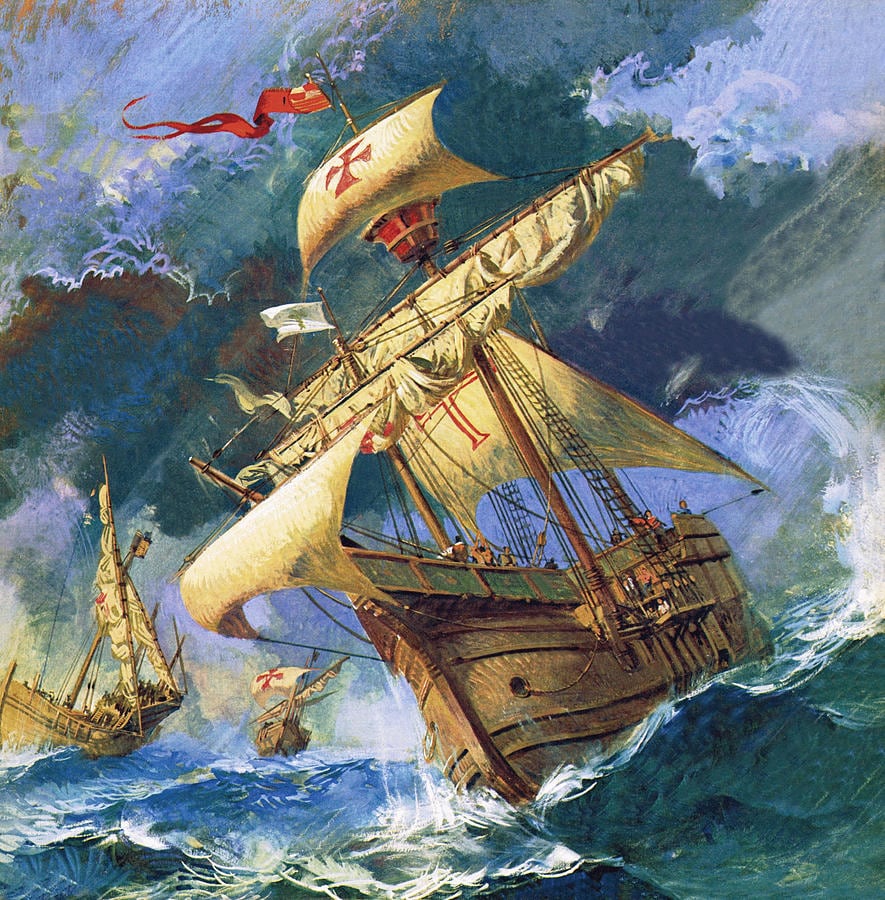
First voyage (August 1492 – March 1493). With the help of the brothers Martín Alonso and Vicente Yáñez Pinzón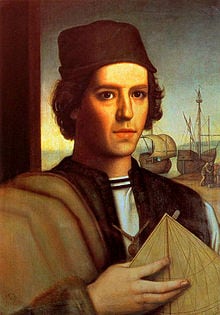 Vicente Yáñez Pinzón (1462–1514). Captain of the Niña on Columbus’s first voyage; in 1500, on an expedition of his own, he was the first European to reach the coast of Brazil., Columbus set out from Palos on 3 August 1492 with three ships and a crew of just over a hundred men. After a stop in the Canary Islands for supplies there followed a long and arduous passage through unknown waters, during which the crew, losing patience, at one point mutinied.
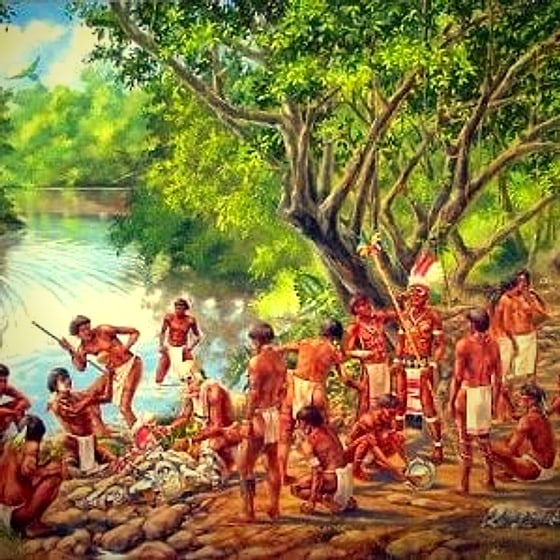
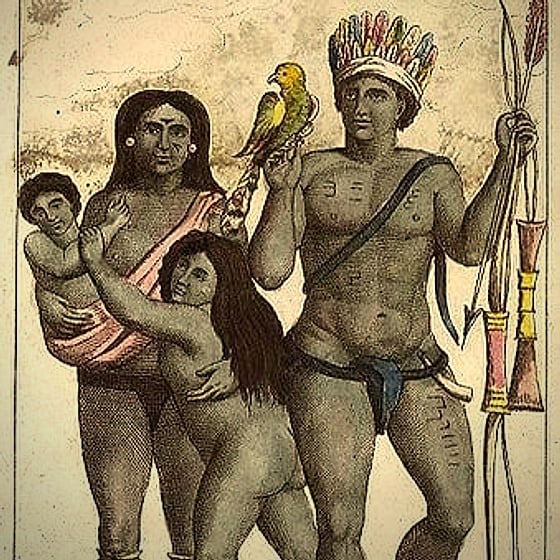
Land was sighted on 12 October 1492, and according to tradition the first to see it was the sailor Rodrigo de Triana. They landed on an island in the Bahamas that the natives called Guanahani; Columbus, in the name of the crowns of Aragon and Castile, named it San Salvador. Believing himself to be near India, he called the inhabitants Indians – a name that would remain in use for centuries. The event is also described in the later chronicles of Fray Bartolomé de las Casas, who retold Columbus’s log of the voyage and the solemn act of taking possession of the island in the name of the Spanish crown.
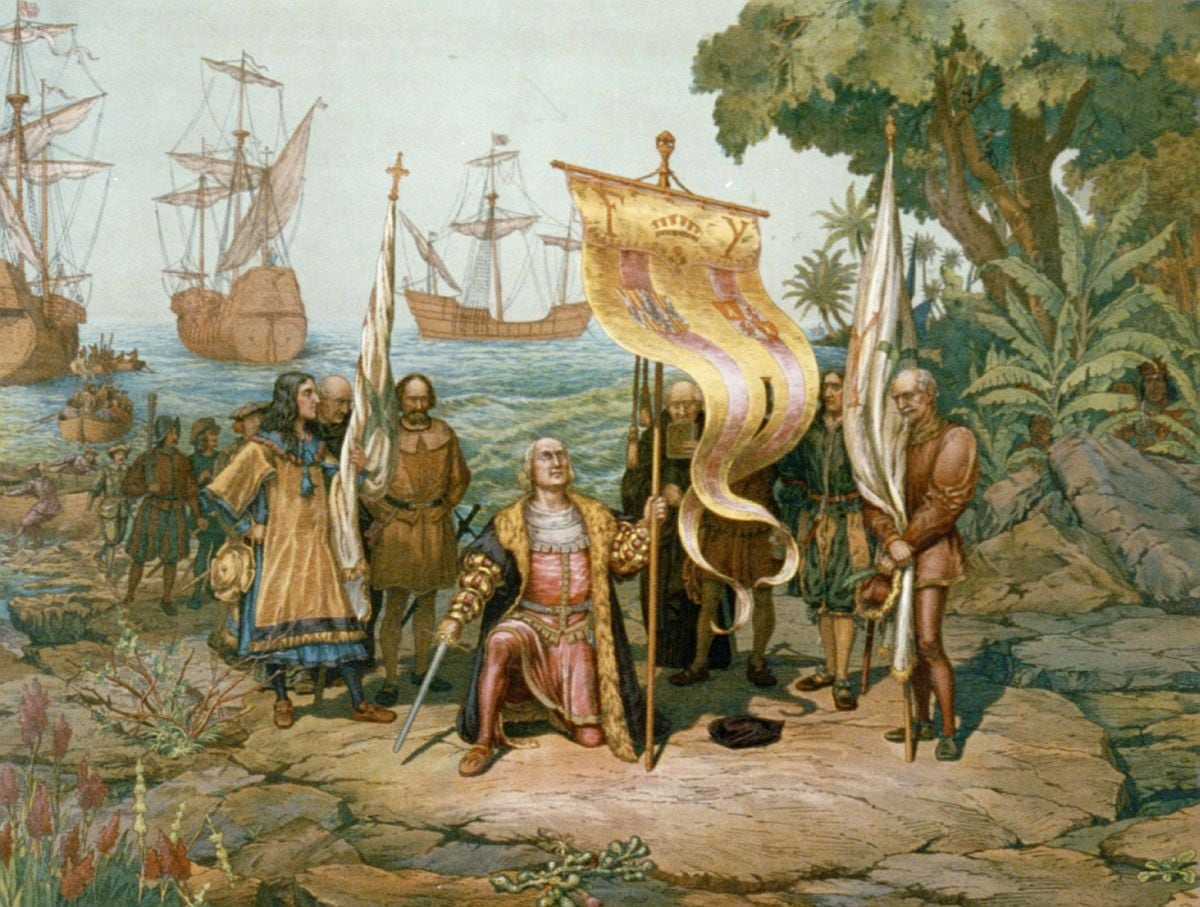
Sailing on, he discovered the neighbouring islands as well: Cuba on 28 October, and on 5 December the island he named Hispaniola (today’s Haiti and the Dominican Republic). On Hispaniola, on the night before Christmas, the Santa María ran aground on a sandbank and was wrecked; the crew saved the cargo and from the wreck built a small fort, named La Navidad, in which 39 men stayed behind. With the remaining two ships Columbus returned to Spain in January 1493, where, amid honours, he received the promised titles of admiral and viceroy of the newly discovered lands.
Second voyage (September 1493 – June 1496). Encouraged by the success of the first voyage, the second venture was far more ambitious: 17 ships and about 1,500 men – soldiers, craftsmen, scribes and priests – sailed from Cádiz on 25 September 1493, carrying domestic animals and plants unknown in the New World. By way of the island that Columbus named Dominica, the fleet reached Guadeloupe, where the sailors, to their horror, came upon traces of cannibalism among the Caribs there, and then discovered Puerto Rico as well.
On Hispaniola they found the fort of La Navidad burned and the crew that had stayed there killed. There are two accounts of the fate of those men: according to one, they died in a clash with the Caribs; according to the other, far more likely and recorded by later chroniclers of the Spanish conquests, they themselves, by their behaviour – violence and plunder – provoked the revenge of the native Taíno. Columbus then founded La Isabela, the first European town in the New World, appointed his brother Diego its governor and went on exploring the Caribbean islands, among which he discovered Jamaica. On his return to La Isabela he found chaos and a failing colony obsessed with the search for gold instead of farming; he went back to Spain taking with him about 500 captured Indians, most of whom died on the way, and this time the court did not receive him with its earlier enthusiasm.
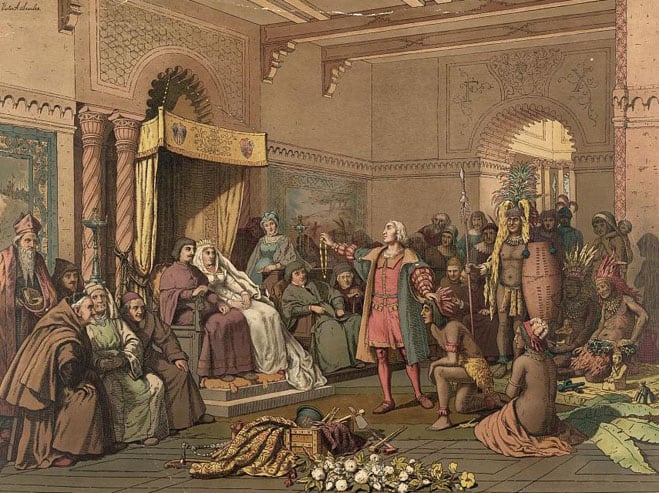
Third voyage (1498–1500). Columbus set out with six ships, three of which he sent straight to Hispaniola, and with the others continued his exploration, discovering the island of Trinidad, the Paria Peninsula and the mouth of the Orinoco. The powerful branches of that river showed that this was land of continental size, but Columbus instead came up with the fanciful idea that he had come upon the four rivers of the Garden of Eden. On returning to Hispaniola he found a revolt against his brother Bartholomew, who in the meantime, together with Diego, had founded the town of Santo Domingo. Because of reports of the colony’s mismanagement, the crown sent a new governor, Francisco de Bobadilla, who arrested Columbus and his brothers and sent them back to Spain in chains. By that time the mass death of the natives from diseases brought by the Europeans was already in full swing.
Fourth voyage (1502–1504). Pardoned, Columbus was given permission for one more, final voyage, although he was expressly forbidden to land on Hispaniola. Because of the state of his ships he nevertheless had to put in at Santo Domingo, where he warned a fleet of thirty ships ready to sail for Spain of an approaching storm; the warning was ignored, and the sea swallowed some twenty of those ships, with their crews and cargo of gold – among the victims, ironically, was Bobadilla, the man who had once arrested him. Columbus’s four ships took shelter off Jamaica, where storms destroyed two and badly damaged the others; even so, that did not stop him from continuing his exploration and discovering the coasts of today’s Honduras, Costa Rica and Panama, as well as the island of Martinique. Ill, he returned to Spain in 1504 and died in Valladolid on 20 May 1506, convinced to the end that he had found a new route to Asia, not knowing that he had in fact discovered a whole new continent.
Legacy
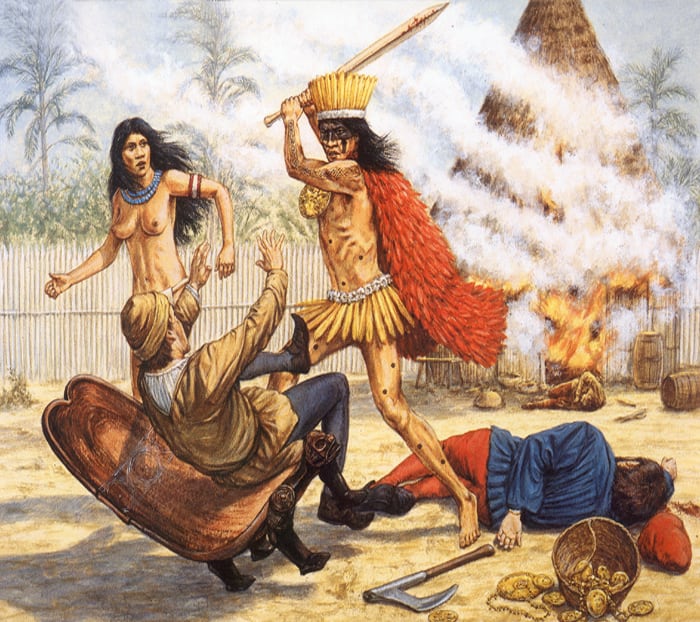
The meeting of two worlds set in motion what is today called the Columbian exchange: from Europe the horse, cattle, sheep, goats, pigs, wheat and the vine came to America, and in the opposite direction went the potato, maize and tobacco, among many other plants and animals. The price of that exchange, however, was enormous: the great pre-Columbian civilizations such as the Aztec and Inca empires disappeared, and the peoples of the Caribbean were almost completely destroyed, both by violence and by diseases against which they had no immunity, and were later replaced by slaves brought from Africa. Portugal and Spain soon divided the newly conquered territories of Latin America between them, and the mixing of European, indigenous and African populations gave rise to new ethnic groups – Mestizos, Mulattos and others.
The figure of Christopher Columbus has therefore been seen to this day in two ways that are hard to reconcile: as a daring navigator whose venture changed the picture of the world for ever, and as a person inseparably bound up with the conquest and suffering of the native population of America. That tension still marks the way Columbus Day is observed in the Americas, experienced in completely different ways by the descendants of the native peoples and the descendants of European settlers – as a celebration of discovery on the one hand, and as a reminder of conquest and loss on the other. How deeply the two worlds misunderstood each other at their first meeting was described, more than four centuries later, by the French anthropologist Claude Lévi-Strauss, who wrote of how the Europeans regarded the natives as animals, while the natives, for their part, tried to establish whether the newly arrived strangers were mortal at all – concluding, as Lévi-Strauss remarks, that of these two equal ignorances it was the attitude of the natives that showed more respect for man.