The Moche (or Mochica) culture developed in northern Peru, in the coastal valleys of the Moche river, which gave it its name, and the Chicama river, between roughly AD 200 and 700. This is a region of harsh, dry climate – a desert landscape covered in greyish sand that the winds carry down from the slopes of the Andes, poor in wildlife, yet one that its inhabitants managed to tame and make fertile.
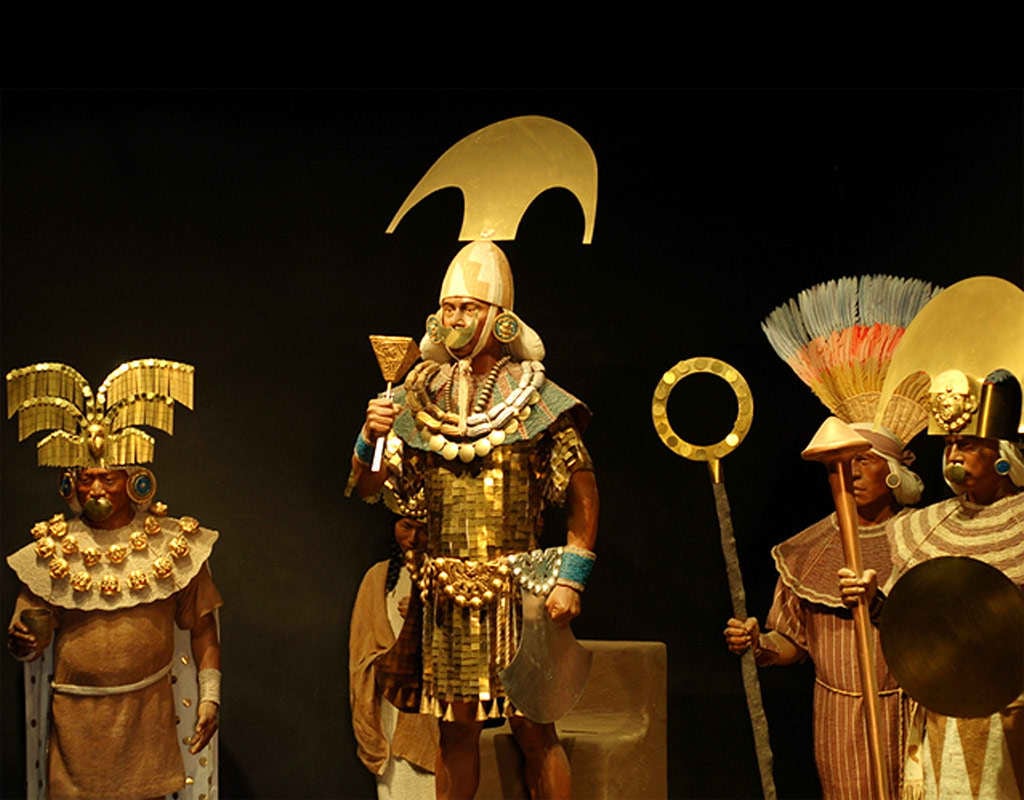
Society was clearly stratified: at the top stood the ruler and the priesthood, at the bottom the farmers and the common people. Membership of a given layer showed, among other things, in face painting and nose ornaments. From depictions in their art and from remains in their tombs we know that they were short, muscular and broad-shouldered, with round faces, prominent cheekbones, aquiline noses and almond-shaped eyes.
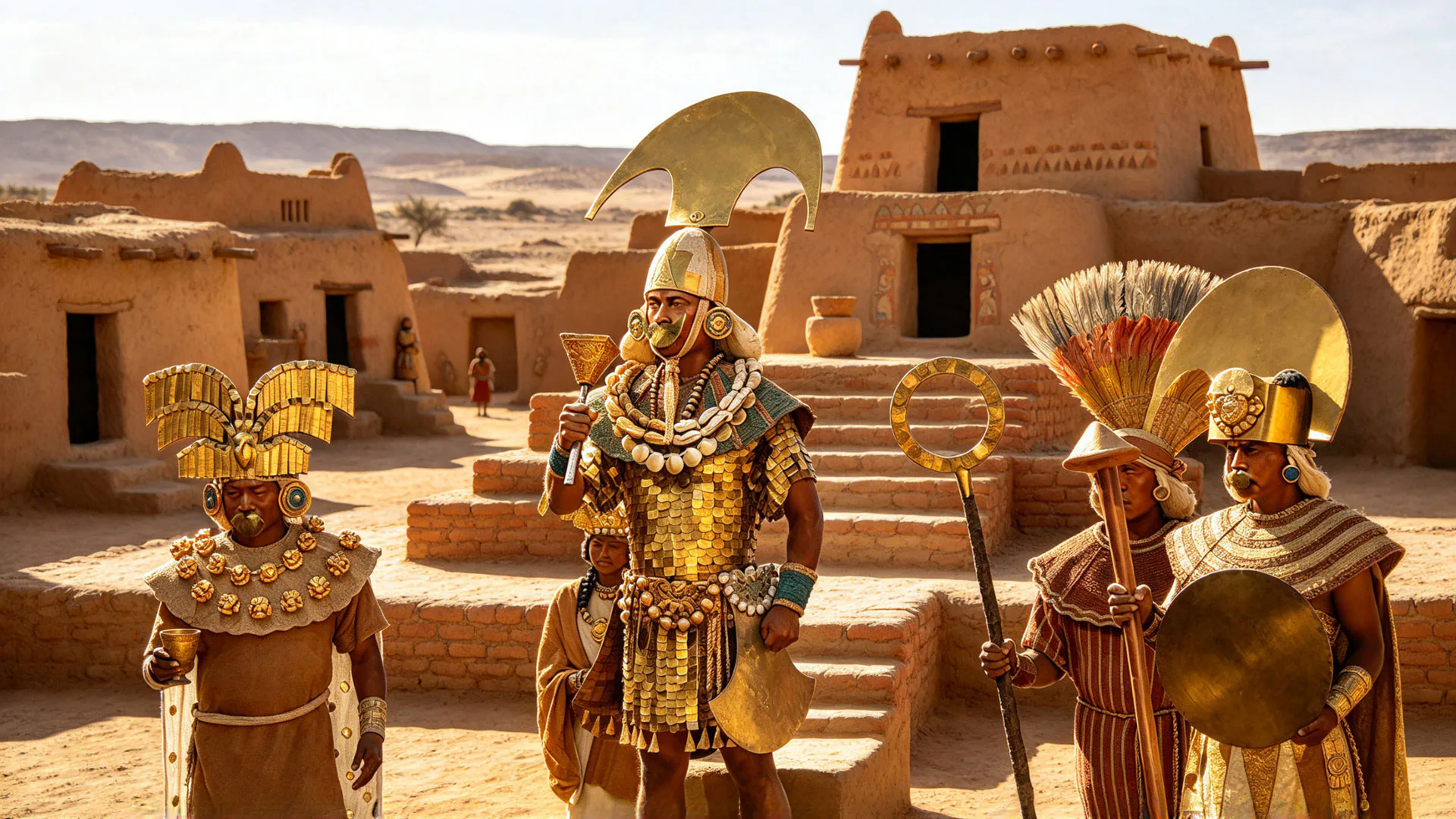
They were superb goldsmiths and knew the metallurgical arts well – they made gold alloys, and they also knew how to gild silver and copper by a technique in which the object was dipped in a solution of gold salts and then heated until a thin layer of gold bonded with the surface. They worked feathers into ornaments and cloaks, and adorned their hands with rings and thin gold leaves on the nails.
Pottery
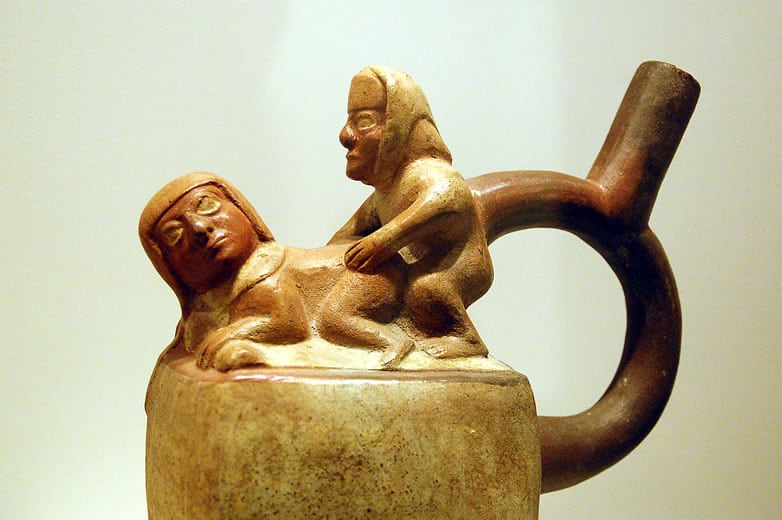
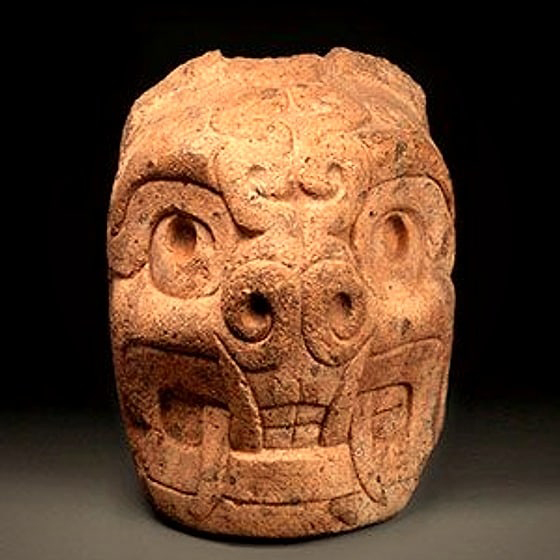
The Moche reached an exceptionally high level in the making of pottery. Their huacos (the Quechua word for pottery vessels) were made of two-coloured clay, reddish and creamy white, and depict in a realistic way the most varied aspects of everyday and religious life. A special achievement of this art are the so-called portrait vessels, in which the neck of the vessel is shaped as a highly individual human face.
Part of the pottery also bears explicit erotic motifs, covering a whole range of sexual themes; archaeologists note, for example, that depictions of anal intercourse outnumber those of vaginal intercourse, which is sometimes interpreted as a possible form of birth control, while at the same time the sources speak of severe punishments for extramarital affairs – which suggests that the freedom we see on the pottery was probably the privilege of a narrow elite rather than a reflection of the ordinary person’s daily life.
Entertainment and ritual were closely intertwined: feasts included the copious drinking of chicha, an alcoholic drink obtained by fermenting maize, while dance and music were part of religious festivities. Special clothing and masks were worn for dancing, and the instruments were flutes of cane and clay, a trumpet made from a large sea shell (pututo), various rattles and drums covered with llama skin.
Food, building and religion
Farming was the backbone of the economy. The Moche developed an irrigation system whose complexity bears comparison with the best solutions of the Old World – a branching network of canals and aqueducts supplied whole valleys with water (the La Cumbre canal, about 113 km long, brought water from the Chicama river), and on steep slopes terraces were built to increase the area of farmland. They grew maize, beans, peanuts, potatoes, cucumber, coca and cotton, and the land was shared out according to fixed rules – every man received a basic plot (tupu), with an addition for each child born, while the nobles had far larger holdings.
Besides farming, hunting and fishing played an important part in their diet – they hunted deer, birds and sea lions, and kept monkeys and parrots as pets. Domesticated llamas gave wool and meat and served as pack animals, and their entrails were also used in divination. The people of the coast built boats like those that can still be seen on Lake Titicaca today.
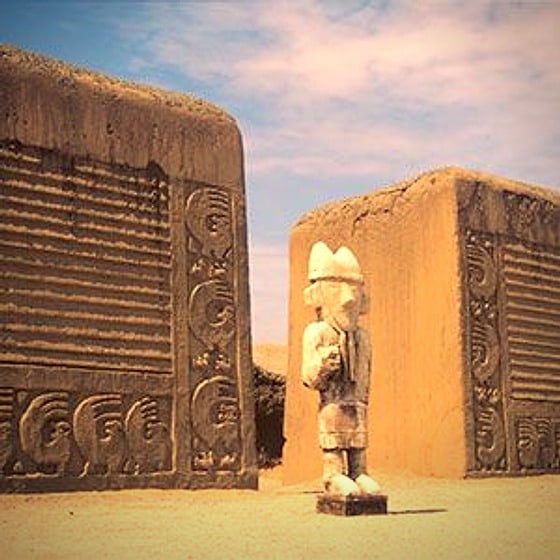
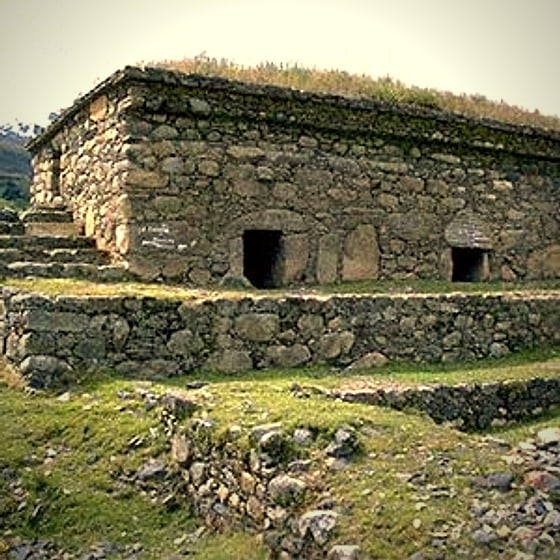
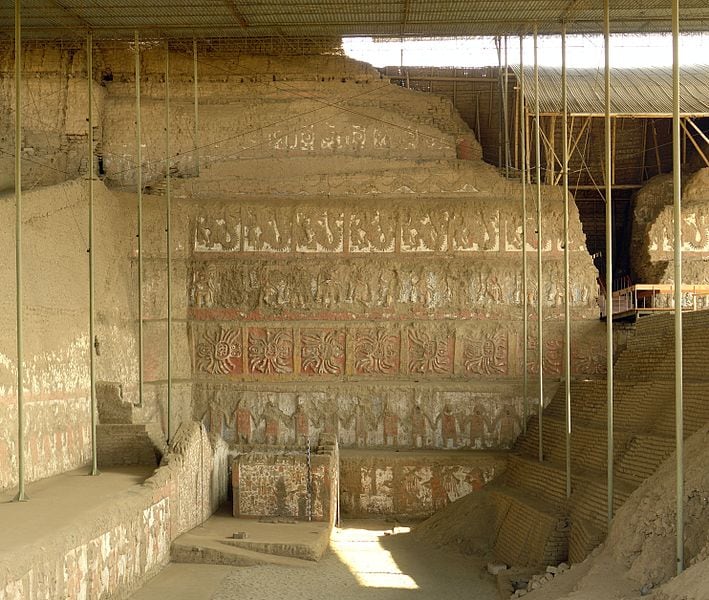
The commonest building material was unfired brick, with less use of stone, and roofs were covered with thatch or reeds. According to the description of a 16th-century Spanish chronicler, every local ruler in the valley had a large house of brick, with columns, terraces and a spacious plaza nearby. The outer walls were plastered and painted with murals, and forts were built in the fields for defence against attackers, as well as a network of roads enclosed by brick walls, in places as high as a metre and a half.
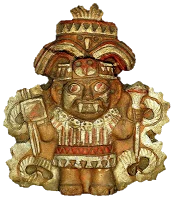
At the centre of their religion stood the cult of the moon, which they called Si; the larger temple was built in its honour, while the smaller one was dedicated to the Sun. Natural phenomena were interpreted as the work of deities, and the San Pedro cactus, rich in mescaline, was used in their rites – according to tradition, chosen girls leapt from rocky cliffs under its influence in order to appease the forces of nature. Human sacrifice existed, though not on the scale found among the Maya or the Aztecs in Mesoamerica. The supreme deity of the pantheon was called Ai ApaecAi Apaec, “the maker”, a deity often shown with feline fangs, the chief god of the Moche pantheon.. Like many other Andean peoples, they believed in an afterlife and that the deceased, on the way to the other world, must be properly buried with all the things that had belonged to him in life.
Sipán
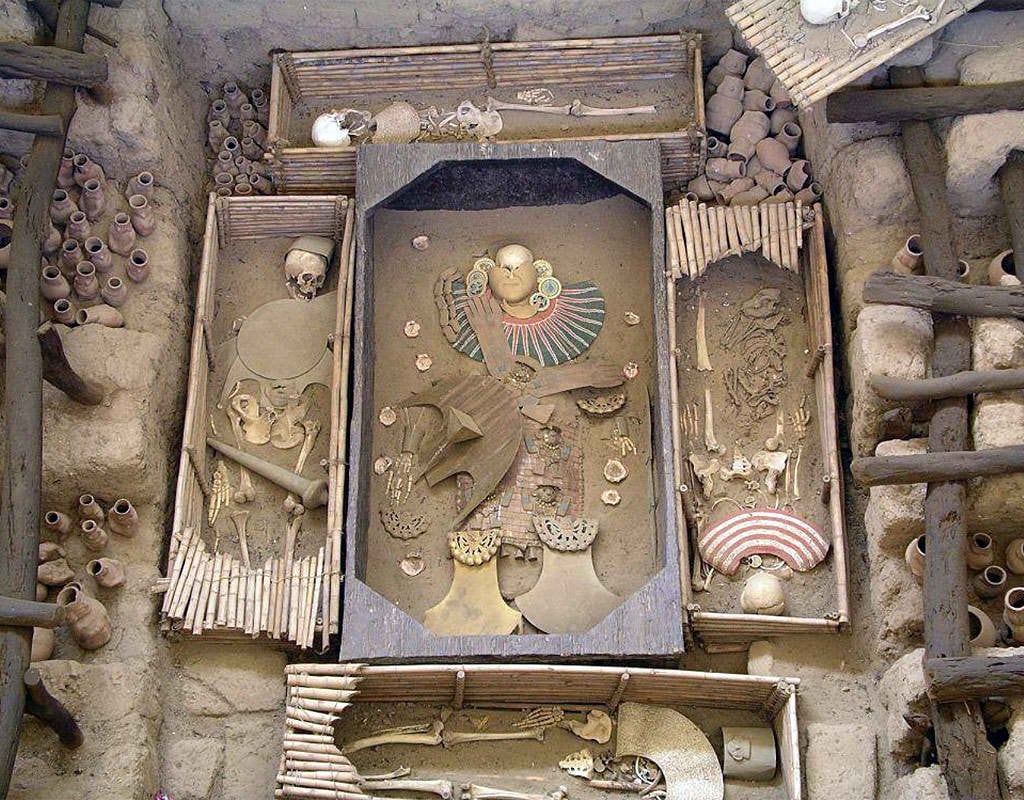
One of the most important archaeological discoveries of the 20th century, not only in the Americas but in the world, took place in the small village of SipánA settlement in northern Peru, in the Lambayeque valley, known for a series of intact royal tombs of the Moche culture discovered in the late 1980s., in northern Peru. In February 1987 a group of local grave robbers (huaqueros) began digging in a sacred mound and came upon a rich tomb. A quarrel over the loot led one of them to report the matter to the police, who called in the archaeologist Walter AlvaA Peruvian archaeologist who led the excavations at Sipán from 1987 and presented the discovery to the world as one of the most important in the history of Andean archaeology. to take over the investigation.
The excavations did not pass without conflict – looters went on attacking the site, and in one such incident the police killed one of them. Even so, the team uncovered a whole series of tombs. In the central one nine bodies were found: that of the ruler of Sipán himself, two of his female attendants, three warriors and three other people, all laid in the tomb already dead, while the question of whether they set out for the other world willingly remains open.
The remains of the ruler in the main coffin were covered with pectorals, necklaces and other objects of gold, as well as with shells of the sea mollusc Spondylus, which the Moche regarded as the food of the gods. In the adjoining niches 221 ceramic vessels were found, with scenes from everyday life. Like many Andean cultures, the Moche too finally came to grief through a series of natural disasters – El Niño cycles, droughts and floods – which led to famine and conflict over ever scarcer resources. Walter Alva later described the discovery at Sipán as a deeply personal and emotional experience, a chance to present to the world the splendour of an almost forgotten culture.