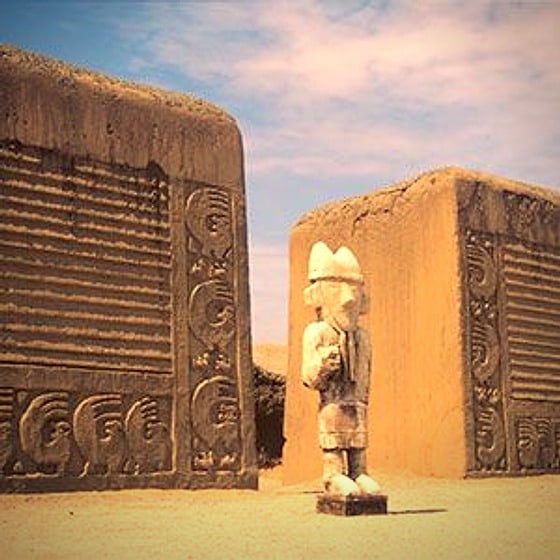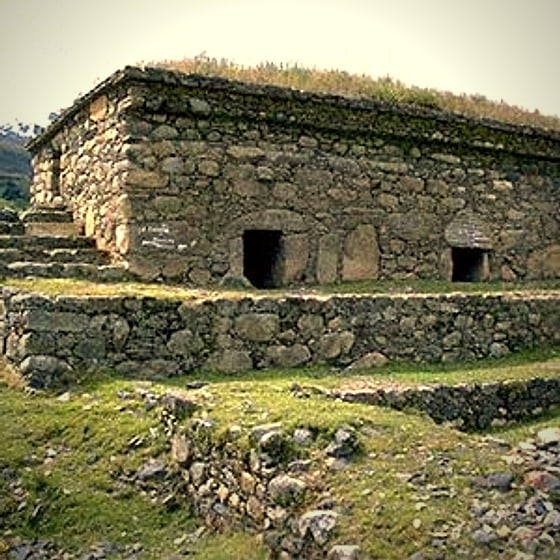
In southern Peru, on the Paracas Peninsula, 18 km from the port of Pisco, the remains of the Paracas cultural horizon were found, which can be traced from 700 BC to AD 200.
They were found by the Peruvian anthropologist and archaeologist Julio César TelloJulio César Tello (1880–1947), one of the founders of Peruvian archaeology. He discovered the remains of the Paracas culture in 1925, and also studied the Chavín culture. (1880–1947). Besides the Paracas Peninsula, the former inhabitants of Paracas also occupied the sandy plain that stretches to the Pisco region.
Especially important are the Paracas caverns, a kind of underground chamber in which the mummies of the old inhabitants of the peninsula were discovered. The bodies were wrapped in textiles and placed in wicker baskets, in the foetal position. Several dozen mummies were found in each chamber (as many as 55 in one).
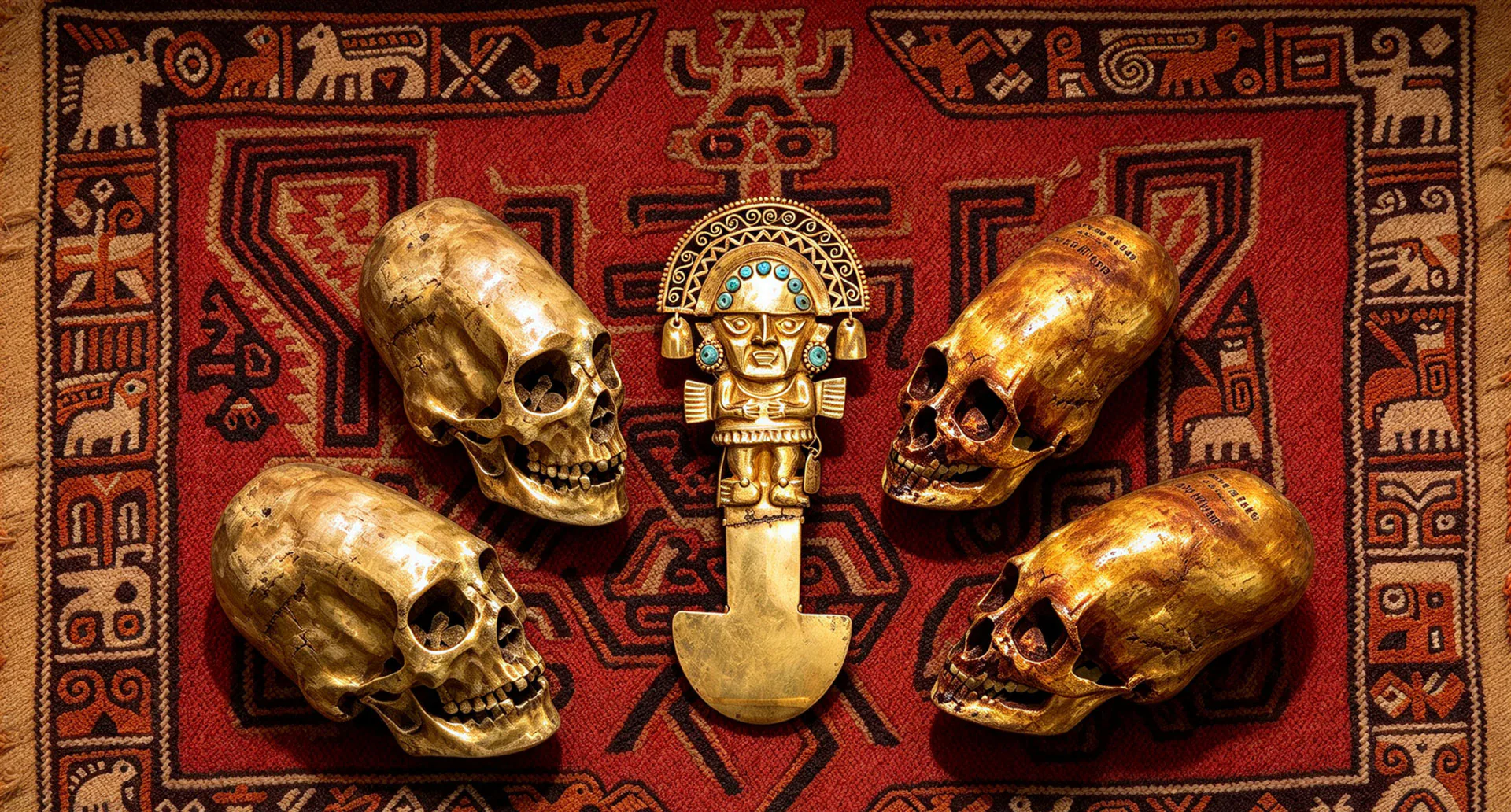
The mummies had undergone trepanationThe surgical opening of the skull with a sharp blade. On many skulls from Paracas the bone can be seen to have healed after the operation, which means that the patients survived it., and there was also a custom of artificial skull deformation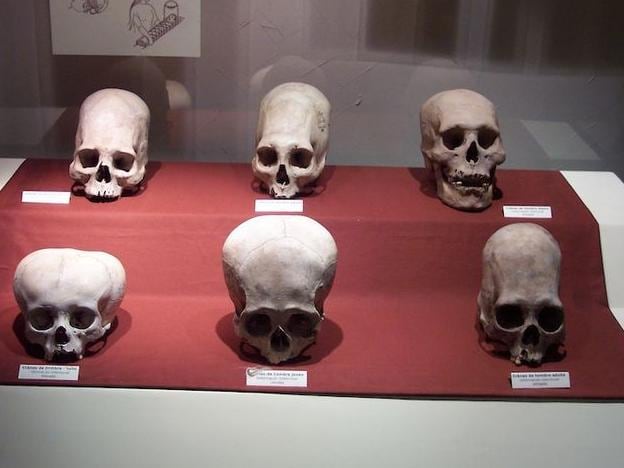 Skulls from Paracas National Museum of Anthropology, Archaeology and History of Peru, Lima.. On the basis of the manner of burial, Julio César Tello divided the Paracas culture into two phases. In the first, the Cavernas phase, the skull was widened and reshaped at the back, while in the second phase (characterized by the burial of the dead in cemeteries) it was narrowed and elongated.
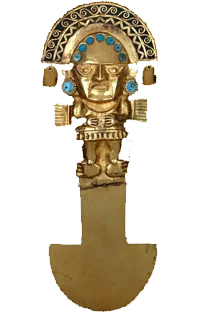
The Paracas people, then, were the first surgeons of ancient Peru. For these purposes the tumi knife and the tumi scalpel were used. Today the tumi knife is one of Peru’s most important tourist symbols.
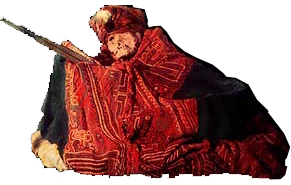
Besides their sophisticated surgery and mummification, the Paracas people are also known as superb weavers. They developed a special technique for making textiles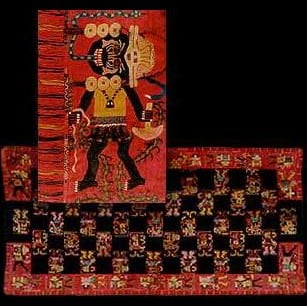 A textile from Paracas Embroidered motifs on Paracas textiles., which gave this culture a unique artistic stamp. The textiles were dyed with natural dyes, among which red, blue, yellow, light blue and brown predominate. The material was most often wool (of the alpaca or the vicuña), and they used cotton as well.
The garments found bearing rich religious motifs suggest that they were worn by priests, while the simpler clothing is assumed to have belonged to ordinary people.