Along the humid lowlands of the Gulf of Mexico, in the territory of the present-day Mexican states of Veracruz and Tabasco, between about 1200 and 400 BC there developed the civilization that we today call the Olmecs. The name was given to them much later by Aztec tradition – the word Olmeca means roughly “rubber people” – for the name by which they actually called themselves is not known, since their script, if they had one, has not been deciphered to this day. Even so, archaeologists often call them the “mother culture” of Mesoamerica, because the roots of much later civilizations, from the Maya to the Aztecs, can be recognized in their art and beliefs.
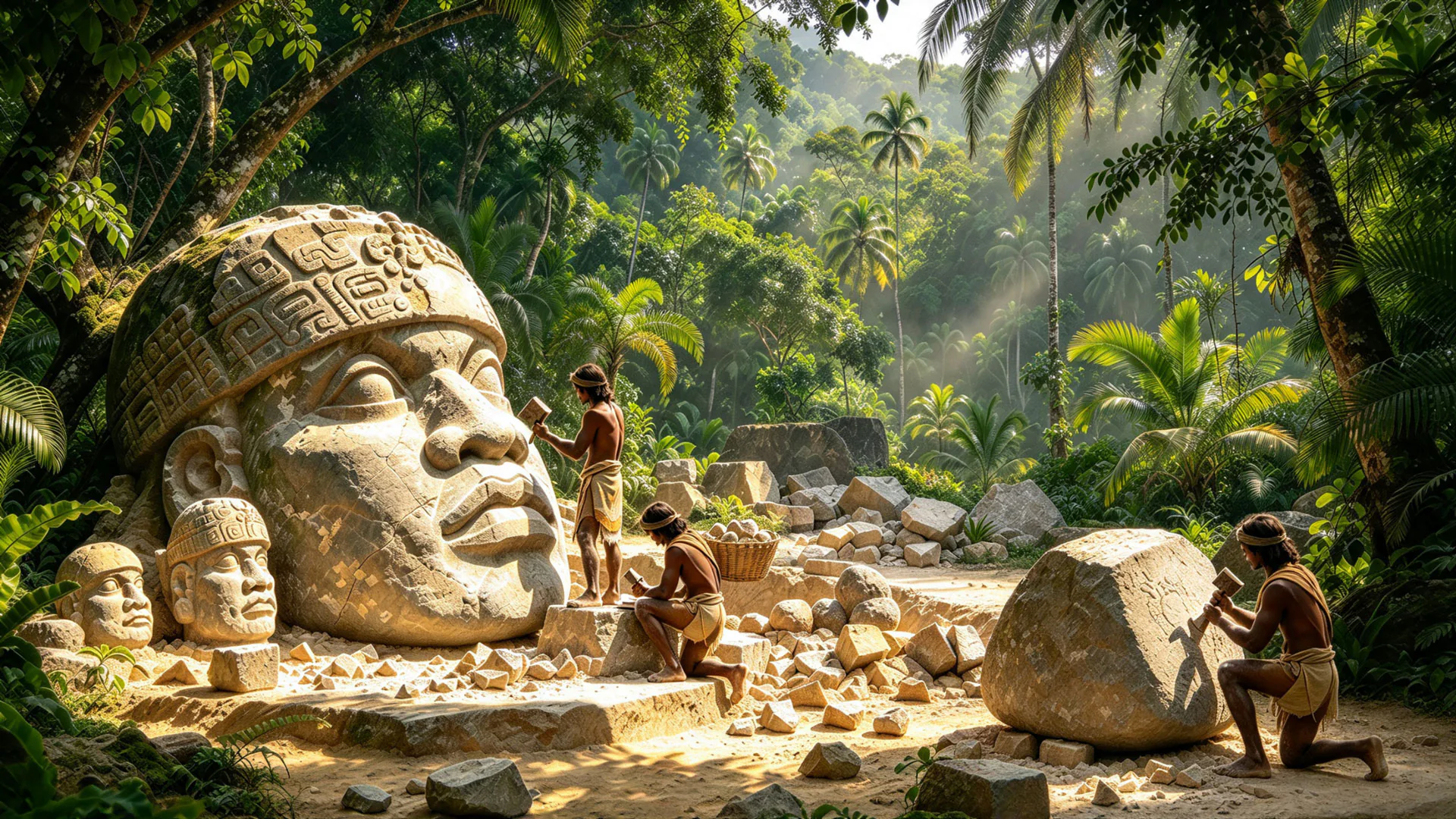
The earliest great centre was San Lorenzo, which flourished between about 1200 and 900 BC, and after its fall the role of leading centre passed to La Venta, until about 400 BC. Both sites are known for their colossal stone heads – some seventeen such monuments have been found so far, from one and a half to more than three metres high and weighing up to several tens of tonnes. They were carved from basalt quarried in the Sierra de los Tuxtlas mountains, from where, probably on rafts down the rivers, they were transported up to a hundred kilometres to the places where they were set up – an undertaking that called for a huge organized workforce, although the Olmecs knew neither the wheel nor draught animals. Each head has recognizable, individual facial features, so it is assumed that they portray particular rulers, often with something like a ball-game helmet on their heads.
Jaguar gods and sacred stone
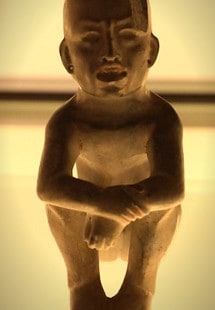
The central place in Olmec art is held by the figure of the were-jaguarA hybrid figure in Olmec art, half man and half jaguar, associated with the shamanic transformation of the ruler and with the deity of rain and of the fertility of the land. – a hybrid being with a child’s face, downturned corners of the mouth and sometimes a cleft head. The motif recurs on small figurines and masks of jade and other green stone, which the Olmecs imported from distant sources and regarded as sacred; at La Venta whole mosaic floor compositions of such stone were discovered, carefully assembled and then deliberately buried as an offering.
The Olmecs are also credited with the oldest known playing of the Mesoamerican ball game – archaeological finds show that from the sap of the rubber tree, mixed with the juice of a species of morning glory, they made rubber of varying elasticity, thousands of years before a similar process was “rediscovered” in Europe as vulcanization. Near San Lorenzo the so-called Cascajal BlockA stone slab found in 2006 near San Lorenzo, inscribed with 62 incised signs dating from about 900 BC – the oldest known example of writing in Mesoamerica, still undeciphered. was also found, a slab with a series of incised signs dating from about 900 BC, the oldest known example of writing in Mesoamerica, though still undeciphered. It is because of traces like these – the ball game, the calendar, the jaguar cult and the beginnings of writing, all of which appear later among the Maya and other peoples – that the Olmecs are regarded as the cultural root of the whole of Mesoamerican civilization, although archaeologists still debate how far that influence was direct and how far it was a matter of the parallel development of related cultures.