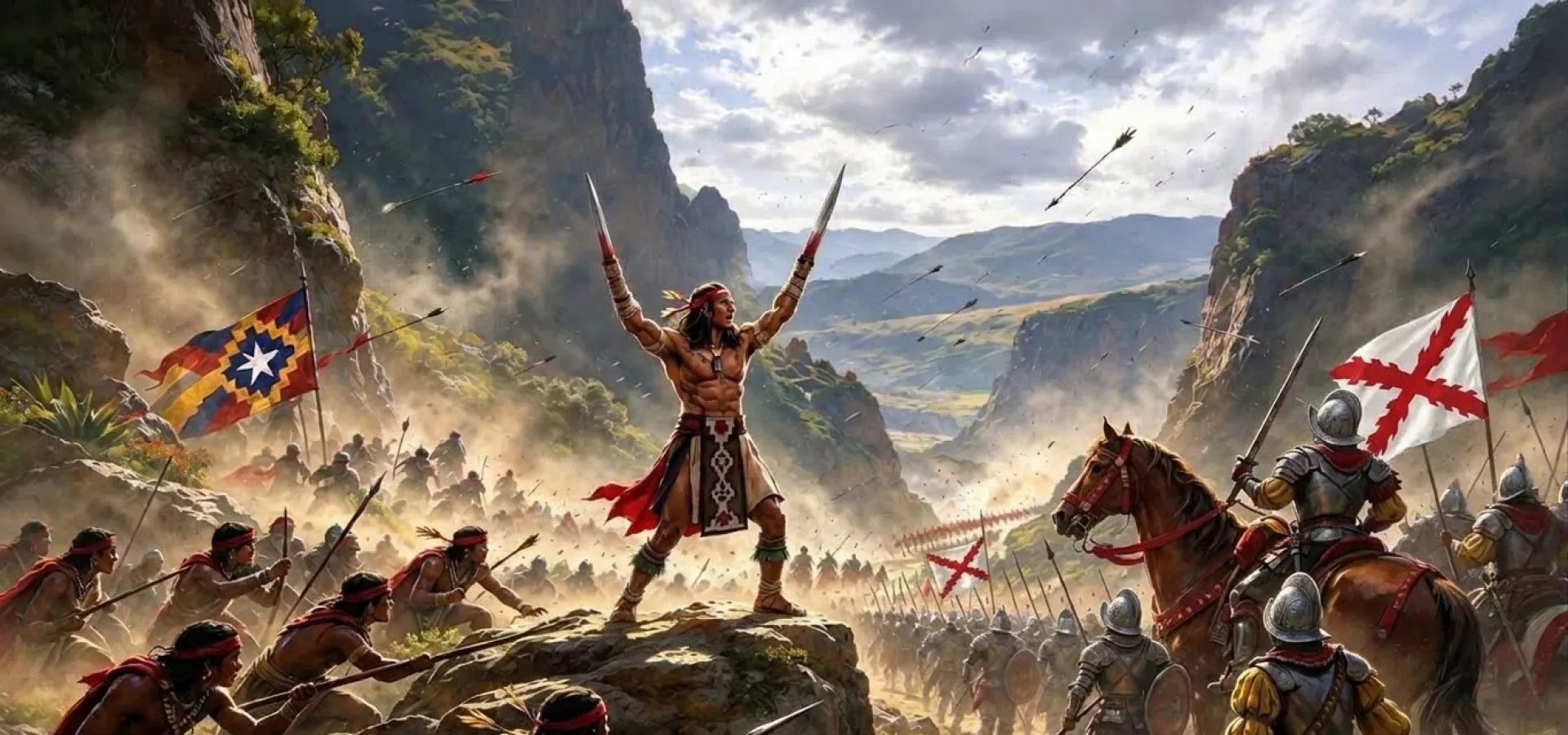
The Mapuche are an indigenous people of central and southern Chile and the neighbouring regions of Argentina. Their name means “people of the land” in their language, Mapudungun (mapu – land, che – people). They are remembered as a people who for centuries successfully resisted every conqueror: they halted the advance of the Inca, fought the Spaniards for more than three hundred years and kept their independence south of the Biobío River until the second half of the 19th century, when their lands were taken by the armies of Chile and Argentina.
People of the land
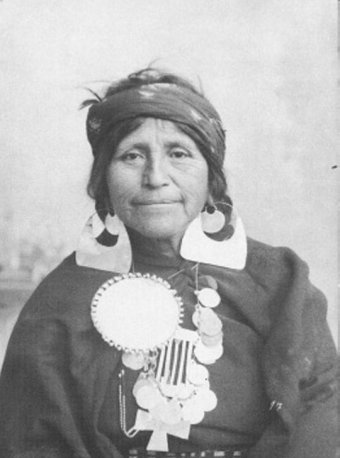
The Mapuche never had a single state or a single ruler. Society was built on the family community, the lof, headed by a chief, the lonko; several communities could join in larger alliances, and only in time of war did they elect a common war leader, the tokiThe war leader whom the Mapuche communities chose only for the duration of a war; when the war was over, his authority ended too. As a sign of his office he carried a stone axe, the toki.. This very dispersion was their greatest strength: there was no capital whose capture would subdue the whole people, as had happened with the Aztecs and the Inca.
They lived from farming, herding, hunting and gathering, in houses of wood and straw called ruka. In religious life a special place belongs to the machiThe healer and spiritual intermediary of the community, most often a woman. The machi cures illness, interprets dreams and leads ceremonies; the signs of her office are the rewe – a wooden post with steps carved into it – and the ritual drum, the kultrun., a healer and intermediary between people and the world of spirits, and the most important communal ceremony is the ngillatun, a prayer for fertility and the good of the community. During the 18th and 19th centuries they also developed a distinctive art of silverwork, used for splendid jewellery and horse ornaments.
The Inca on the Maule River
At the end of the 15th century the Inca extended their empire into what is today northern and central Chile. According to the Inca Garcilaso de la Vega, the Inca army met fierce resistance on the Maule River from the peoples the Spaniards later called the Promaucaes, and after a battle lasting several days gave up any further conquest. Historians today debate exactly where and when this battle took place, but they agree on one thing: the southern border of the Inca Empire remained somewhere between present-day Santiago and the Maule River, and the peoples south of it kept their independence.
Lautaro and the start of the Arauco War
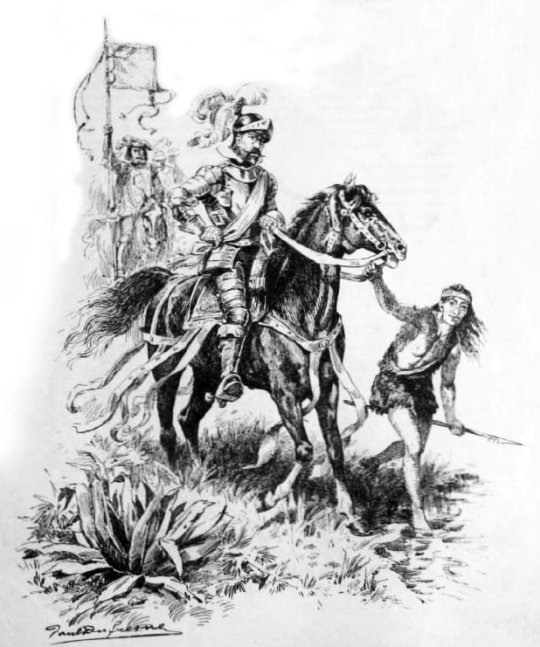
The Spanish conquistador Pedro de Valdivia founded Santiago in 1541 and then moved south, where he built Concepción and a string of other towns and forts on Mapuche land. The response was led by Lautaro (Leftraru in Mapudungun), a young man who had been captured as a boy and served for years as Valdivia’s groom. In that time he learned to ride and came to know the Spanish way of war, and then he escaped to his own people.
Lautaro showed the Mapuche how to fight cavalry and armoured men: they attacked in waves, replacing tired units with fresh ones, and chose ground where horses were of no use. On Christmas Day 1553, at the fort of Tucapel, the Mapuche defeated Valdivia’s force; the governor was captured and soon executed. New victories and a campaign towards Santiago followed, but in April 1557 Lautaro was killed in a surprise Spanish attack at Mataquito. His name remained a symbol of the struggle for freedom – centuries later the Lautaro Lodge, a secret society of fighters for the independence of the South American states, was named after him.
After Lautaro’s death the resistance was led by the toki Caupolicán. He was captured in 1558 and executed in Cañete by impalement, as the chroniclers record. The war that had begun was called the Arauco War by the Spaniards, after the region of Arauco, and they called the Mapuche Araucanians.
Galvarino
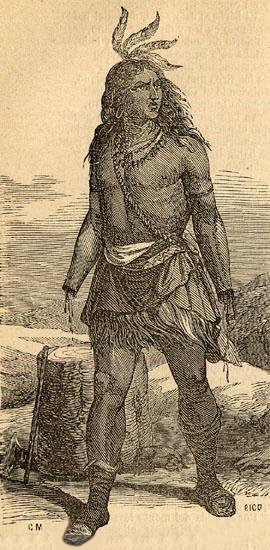
No story of the Arauco War is remembered as vividly as that of Galvarino. In November 1557, at Lagunillas, on the southern bank of the Biobío not far from its mouth, the army of the new governor, García Hurtado de Mendoza, clashed with Mapuche warriors. Among some 150 prisoners was Galvarino, a warrior who had earlier fought under Lautaro. As punishment for the rebellion, the governor ordered some of the prisoners to have their right hand and nose cut off, and Galvarino had both hands cut off. The prisoners were then released, so that their appearance would frighten the other Mapuche and carry the message that resistance was futile.
Galvarino did exactly the opposite. He returned to Caupolicán and the war council, showed his mutilated arms and called for an even greater uprising. For his courage, according to tradition, he was given command of a unit. Popular tradition also says that he fought with knives tied to his wrists – the image he is best known for today, but one that contemporary sources do not reliably confirm.
A little over three weeks later, on 30 November 1557, the Spaniards won again at the battle of Millarapue, and Galvarino was captured once more. The sources differ in describing his death: the chronicler Jerónimo de Vivar writes that he was thrown to the dogs, while the poet and soldier Alonso de Ercilla, who took part in that campaign himself, states in his epic La AraucanaAn epic poem by Alonso de Ercilla, published in three parts between 1569 and 1589. Ercilla fought as a soldier in the war against the Mapuche and described their leaders with admiration; thanks to him, Lautaro, Caupolicán and Galvarino became known throughout Europe. that he was hanged. Ercilla also describes how he tried to save his life, but Galvarino refused mercy and remained defiant to the end.
Galvarino became a lasting symbol of Mapuche resistance. The commune of Galvarino in the Chilean region of Araucanía is named after him, and his story is still told today as an example of defiance in the face of a stronger enemy. Watch this story as a short video
Curalaba and the frontier on the Biobío
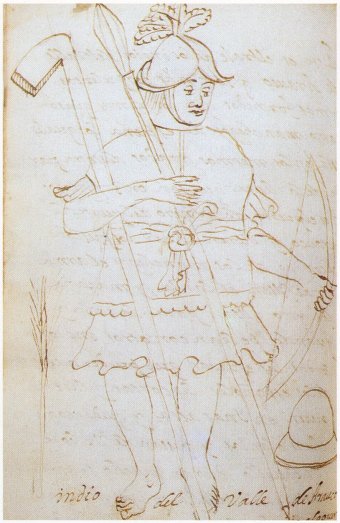
The Mapuche quickly took the horse from their enemies and became excellent riders, and the war went on even after the death of the great leaders. The decisive blow came on 23 December 1598 at Curalaba, where warriors led by the toki Pelantaro surprised and destroyed the force of Governor Martín García Óñez de Loyola; the governor himself was killed. A general uprising followed in which, within a few years, almost all the Spanish towns south of the Biobío River were destroyed or abandoned – an event remembered in the history of Chile as the “destruction of the seven cities”.
In the end the Spanish Crown had to accept reality. At the Parliament of Quilín, in January 1641, the Biobío River was recognized as the frontier and the land south of it as Mapuche land. Wars continued intermittently even after that, but relations were increasingly settled by negotiation at great parliaments and by trade across the frontier. The Mapuche remained one of the few indigenous peoples of the Americas that Spain never managed to subdue.
The occupation of Araucanía and the Mapuche today
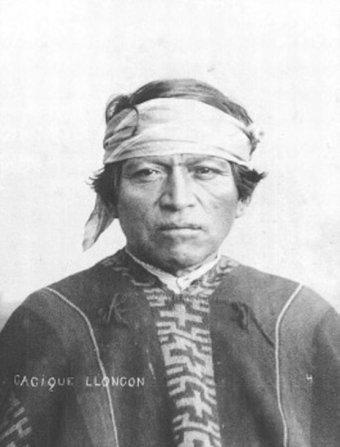
Mapuche independence was ended only by the young states that arose on the ruins of the Spanish empire. Between 1861 and 1883 Chile occupied Araucanía by force, and Argentina, in the so-called Conquest of the Desert (1878–1885), subdued the Mapuche and the other peoples of the Pampas and Patagonia. The Mapuche were then moved onto reservations, a small part of their former land, while the rest was divided among settlers and large landowners.
Yet the Mapuche survived. In the 2017 Chilean census 1,745,147 people identified themselves as Mapuche, almost eight out of ten members of the country’s indigenous peoples, and more than a hundred thousand also live in Argentina. Many still speak Mapudungun, keep their ceremonies and fight for the return of their land, and the names of Lautaro, Caupolicán and Galvarino remain a symbol of a resistance that lasted more than three centuries.